

An AI receptionist for a cleaning company is software that answers inbound calls, texts, and messages, qualifies the job, and books it on your live calendar — automatically, around the clock. For cleaning operators who lose bookings every time a crew is mid-job or a lead lands at 10 p.m., it closes the single biggest revenue leak in the business: the unanswered inquiry. Response speed and digital booking shape conversion rates, with responding to a lead within 5 minutes increasing conversion by 400%.
The real problems cleaning companies are trying to solve
Cleaning is a phone-and-text business run by people who are almost never near a phone. The owner is on a job, the office manager is coordinating crews, and the leads keep coming — most of them outside the hours anyone is free to answer. The result is a stack of specific, measurable losses:
- Missed calls in the busiest windows. Operators miss a large share of inbound calls, and the peak windows are evenings and weekends when the office is dark. A prospect who reaches voicemail rarely leaves a message — they just call the next name on Yelp or Thumbtack.
- Speed decides the booking, not price or quality. For residential cleaning, prospects contact two or three providers at once and book the first one that confirms availability. A five-minute response is dramatically more likely to convert than a thirty-minute one. Once you’re an hour behind, the job is usually gone.
- Quotes go cold. Most of the value in a cleaning pipeline sits in follow-up, yet follow-up is exactly what a busy operator drops first. A single quote sent and never chased is a lost job that already cost you the estimate.
- Leads arrive on every channel. SMS, phone, web forms, WhatsApp, and property-manager email — and customers expect a reply where they messaged you. Juggling five inboxes manually means slow, inconsistent responses everywhere.
- Recurring plans don’t get sold or renewed. Bi-weekly upsells and membership renewals live in one person’s head, competing with calls, routing, and callbacks. The recurring revenue that makes a cleaning business stable is the first thing to fall through.
The tools below all attack some version of these problems. They differ enormously in how far they go — from taking a message to actually running the booking end to end.
1. CogniAgent
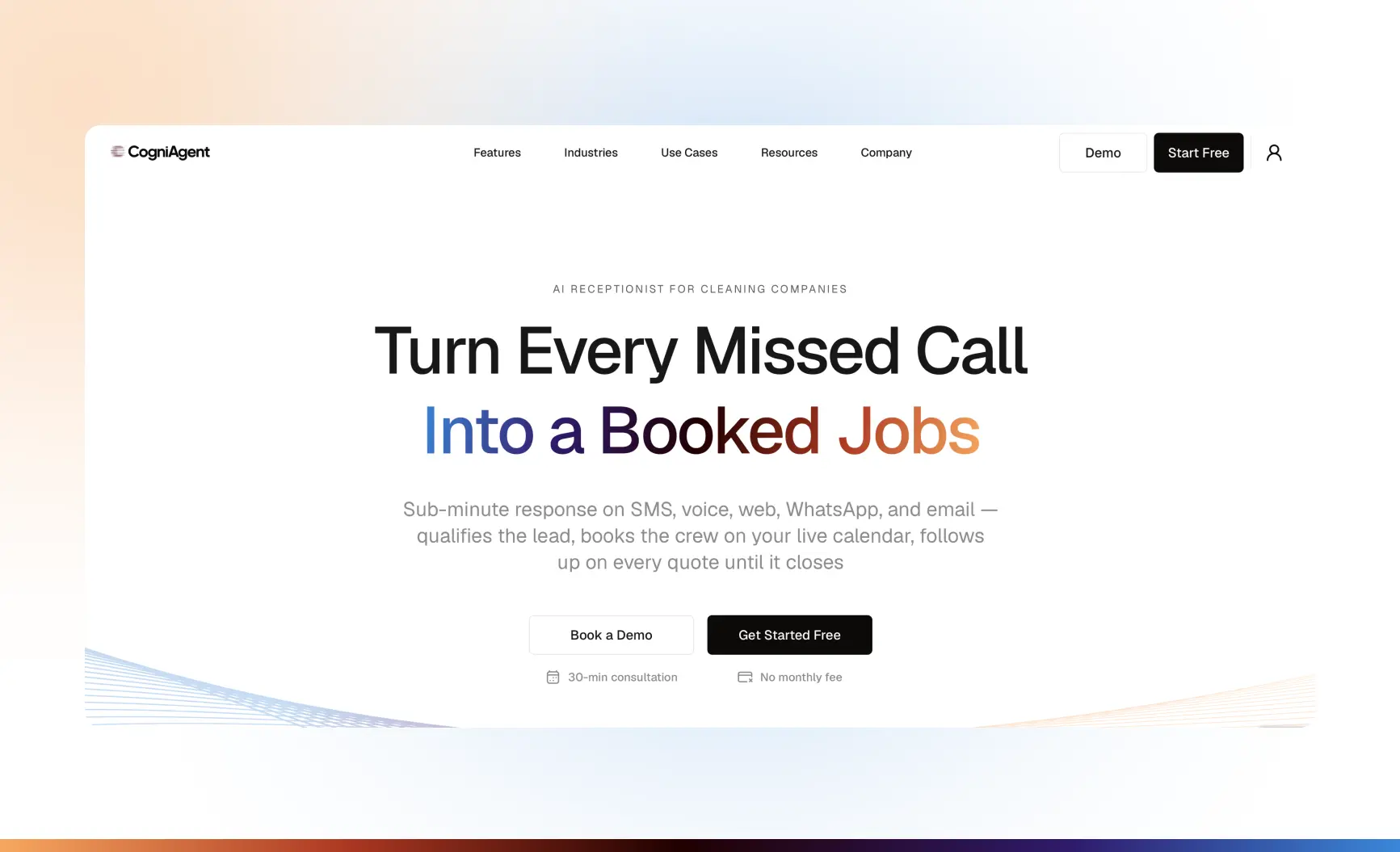
CogniAgent is a cognitive AI platform that runs the full lead lifecycle for cleaning companies on a single canvas (across SMS, voice, web chat, WhatsApp, and email) with live access to your booking software, calendar, and CRM. Where most tools stop at “answer the call,” CogniAgent qualifies the job, prices it, and books a cleaner on your real calendar inside the same conversation.
The difference is architectural. A standard answering service or scripted bot takes a message and forwards a ticket; your office manager still has to call back. CogniAgent’s conversational AI reasons about scope from plain speech — “3-bed condo, two baths, deep clean, tomorrow” — checks your service area, routes residential versus commercial, surfaces add-ons, and writes the booking directly into Jobber, Launch27, or your CRM. It answers on the first ring by voice, texts back missed callers in seconds over SMS, and runs the same intake at 11 p.m. as at 11 a.m.
It also closes the loop after first contact. Day-1, day-3, and day-7 quote follow-ups run automatically, objections get captured, recurring-plan offers get surfaced, and post-service check-ins route happy customers to a Google or Yelp review. That’s the part cleaning operators almost never have time to do by hand.
Commercially, it fits how cleaning businesses actually think. There’s no monthly fee and no per-seat cost — you buy credits from $10 and pay only for what you use, with 5,000 credits loaded free on signup and credits that never expire. Production deployment is included from the free tier, so you can put a working agent live this week rather than next quarter, and you build and own the agent yourself instead of waiting on a vendor’s change queue. On data, customer conversations and records are never used to train public AI models.
Best for: operators who want speed and the booking completed automatically, on the channels their customers already use.
Trade-off: it’s a build-and-own platform, so there’s a short setup step (templated for cleaning) rather than a fully managed hands-off service.
2. Smith.ai
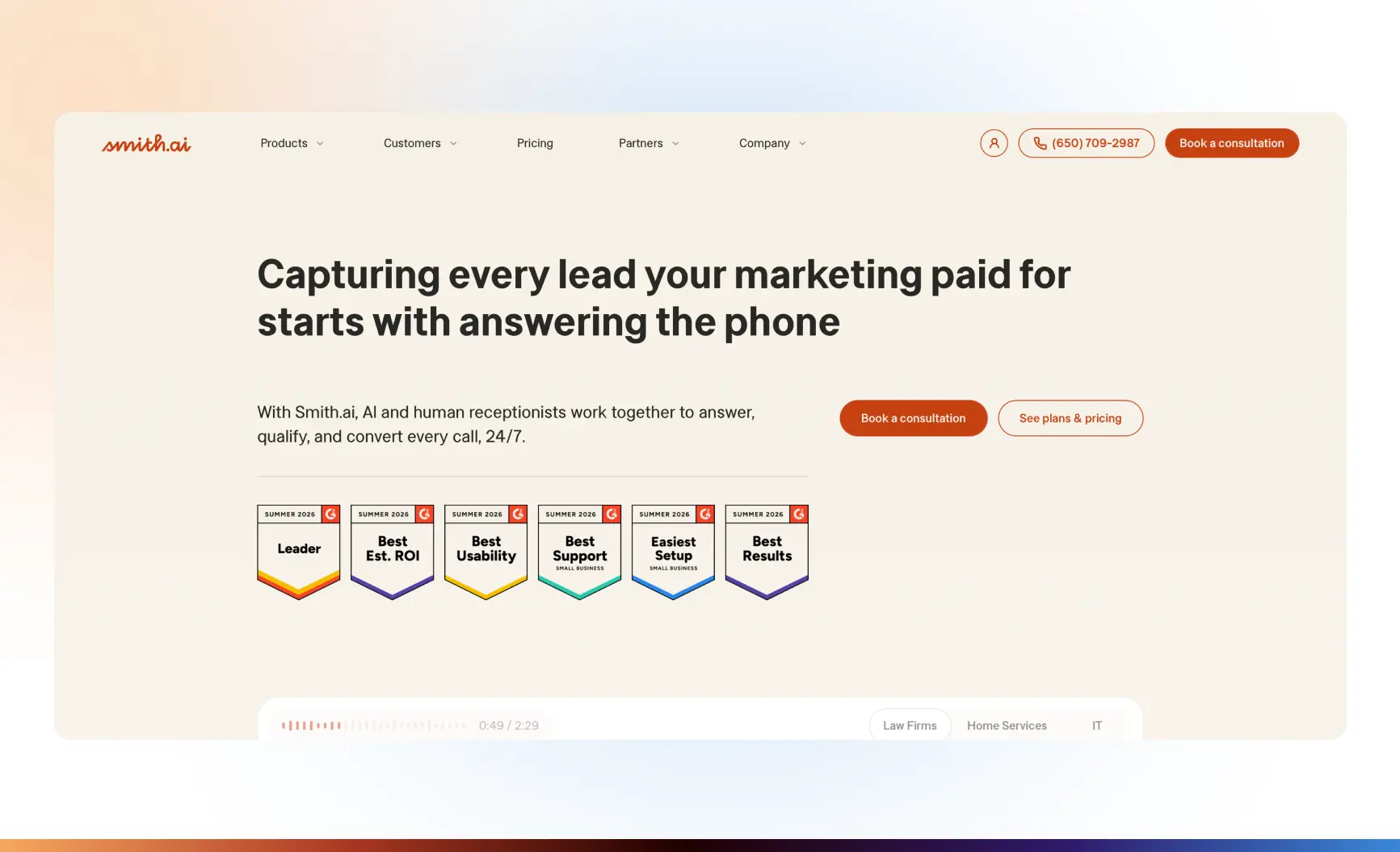
Smith.ai is an AI receptionist with optional live human backup, serving home services, law, and real estate. The AI handles initial call answering, lead qualification, and appointment scheduling, and North America-based human receptionists step in for anything complex. For a cleaning owner who wants the reassurance of a real person catching edge cases, that hybrid model is the main draw.
The trade-offs are ownership and cost. Smith.ai is a managed service — you don’t build, configure, or own the agent — and pricing is per-call on plans starting around $97.50/month, so costs scale with volume. It’s also voice-first, without the text-based multi-channel handling (WhatsApp, SMS, web chat) that carries a large share of cleaning inquiries.
Best for: operators who’d rather outsource the whole desk than run their own agent.
3. ServiceAgent.ai
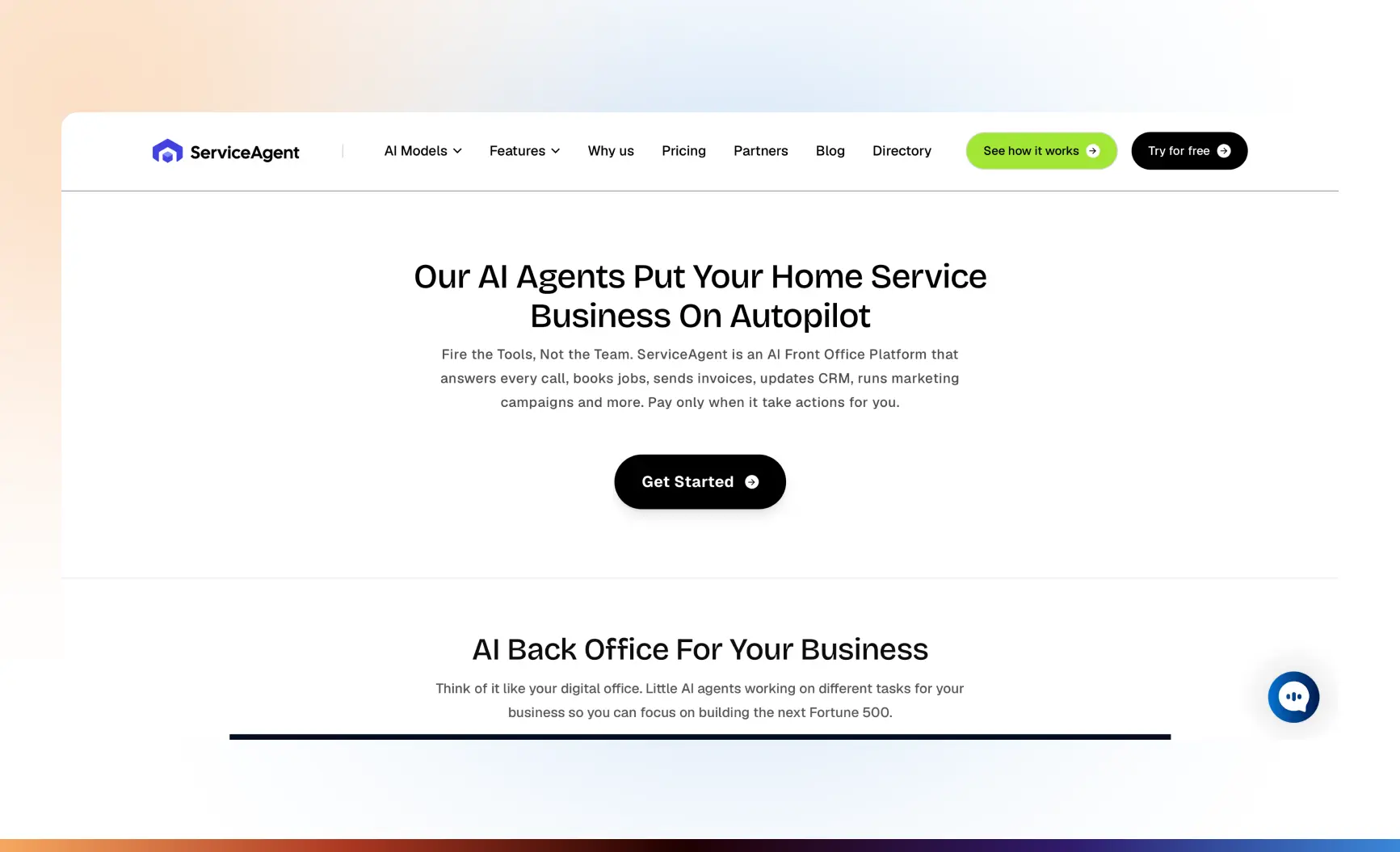
ServiceAgent.ai is an AI receptionist built specifically for home-service contractors, with 24/7 call answering, emergency dispatch handling, and lead qualification. It integrates with the field-service stack contractors already use and prices in an accessible $25–300/month range, which makes it an easy first step for a cleaning company that just wants missed calls covered.
It’s strongest as a voice answering layer rather than a full multi-channel lead engine. If your inquiries come heavily through web forms, WhatsApp, and lead-gen platforms, or you want automated quote follow-up and recurring-plan selling built in, you’ll find it narrower than a full conversational-AI platform.
Best for: contractors wanting straightforward phone coverage at a low, predictable price.
4. NextPhone
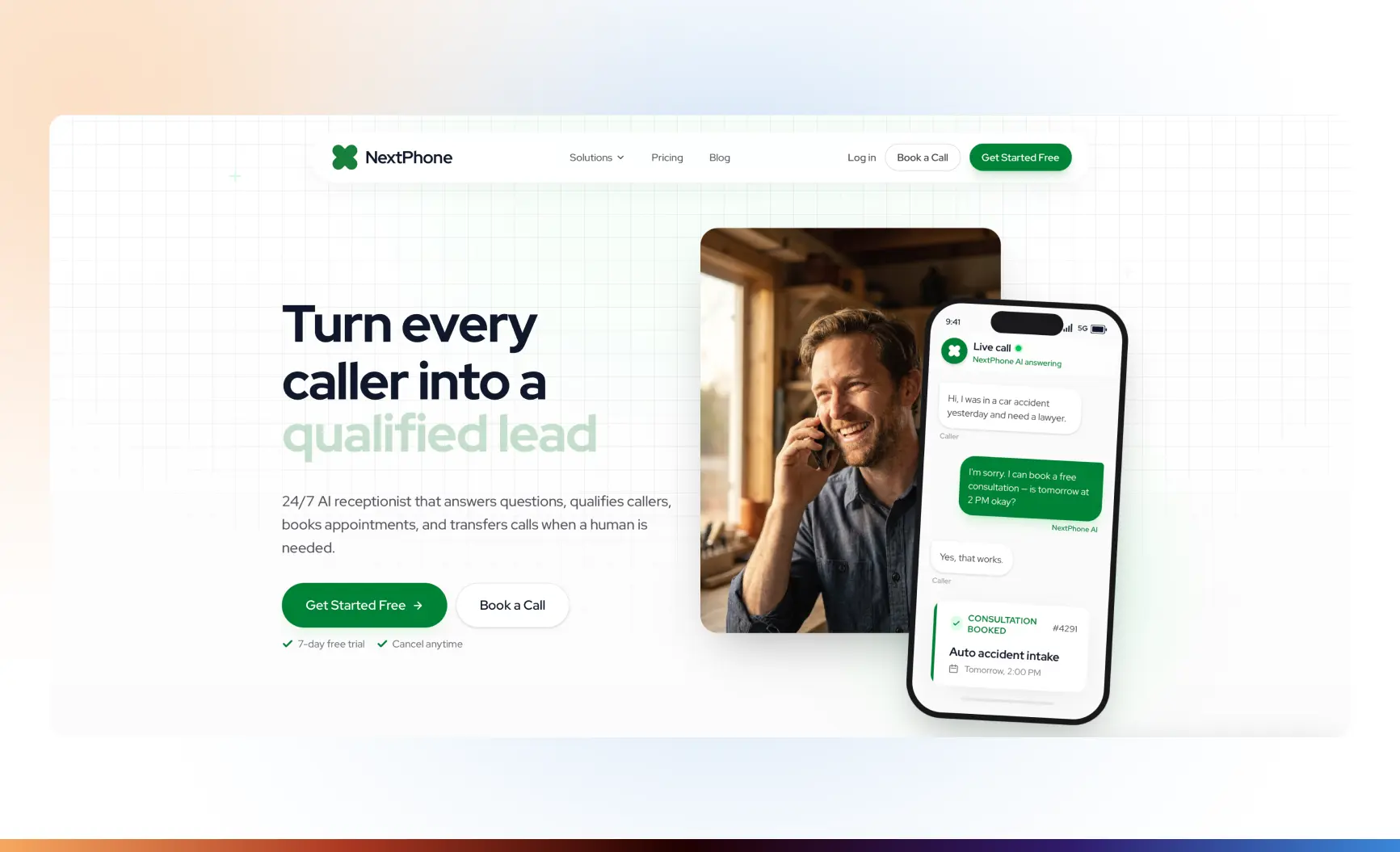
NextPhone is an AI answering service for contractors with trade-specific urgency routing, spam filtering, and a flat $199/month unlimited-calls model. For a busy cleaning operation drowning in call volume, flat-rate pricing removes the anxiety of per-call costs and makes budgeting simple.
Like other answering-first tools, its scope is the phone. It captures and routes calls well but doesn’t run text-first channels, price and book across a live calendar mid-conversation, or handle the follow-up and re-engagement side of the pipeline. Think of it as a strong voice front door rather than an end-to-end booking system.
Best for: phone-heavy operators who want unlimited call handling at a fixed monthly cost.
5. Synthflow AI
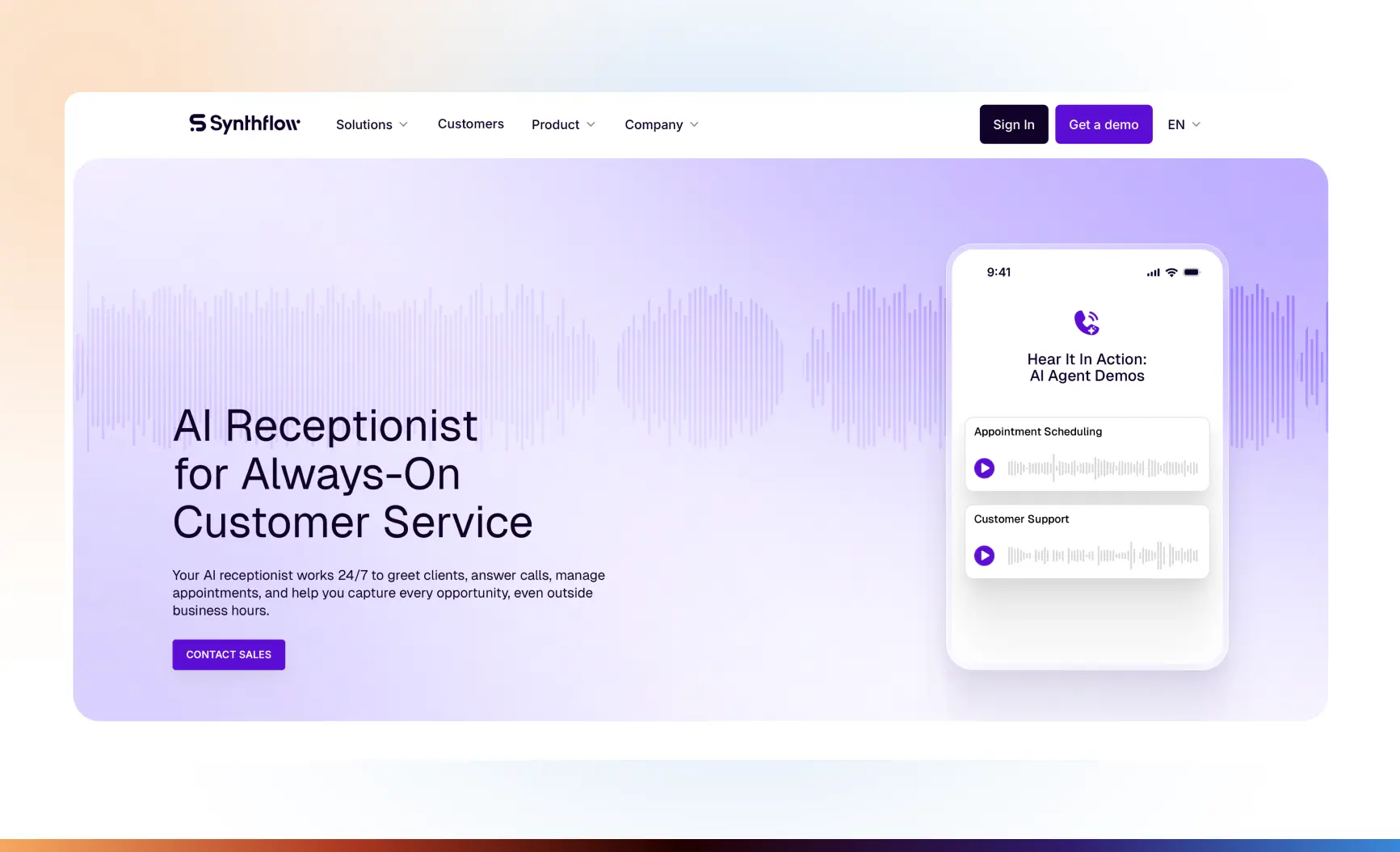
Synthflow is a no-code voice AI platform with its own telephony, 300+ voices, 50+ languages, and drag-and-drop flow design. It has pre-built templates for lead qualification and appointment booking and has recently added SMS and WhatsApp alongside voice, so a cleaning company comfortable configuring its own flows can stand up a capable voice agent quickly.
Its center of gravity is still voice, and per-minute pricing (SMB plans effectively run around $0.45–0.58/minute) can climb at volume. It also focuses on the conversation itself rather than deterministic workflow automation or autonomous background agents, so the “run the whole operation” pieces — follow-up sequences, recurring-plan outreach, deeper system writes — sit outside its core.
Best for: operators who want to build a self-serve voice agent and are primarily phone-driven.
AI receptionists for cleaning services comparison
| CogniAgent | Smith.ai | ServiceAgent.ai | NextPhone | Synthflow AI | |
| Channels | SMS, voice, web, WhatsApp, email | Voice-first | Voice | Voice | Voice + newer SMS/WhatsApp |
| Qualifies the lead | Yes | Yes | Yes | Basic routing | Yes |
| Books on your live calendar | Yes, mid-conversation | Yes | Yes | Takes/routes calls | Yes |
| Booking integrations | Jobber, Launch27, CRM | CRM + Zapier | Field-service stack | Field-service stack | HubSpot, Salesforce, Cal.com, etc. |
| Automated quote follow-up | Yes (day 1/3/7) | No | No | No | Not native |
| Recurring-plan / renewal outreach | Yes | No | No | No | No |
| Model | Build & own (self-serve) | Managed service | Self-serve | Managed service | Self-serve |
| Pricing | Credits from $10, no monthly fee | Per-call, from ~$97.50/mo | $25–300/mo | Flat $199/mo unlimited | From $29/mo (per-minute at volume) |
| Free tier | Yes — 5,000 credits + production deployment | No | No | No | Limited trial |
| Best for | End-to-end lead handling on every channel | Hands-off desk with human backup | Simple, low-cost phone coverage | High-volume phone at a fixed cost | Self-built voice agent |
How to choose right AI receptionist
If you only need the phone answered, ServiceAgent.ai and NextPhone are inexpensive, no-fuss front doors, and Smith.ai adds a human safety net if you’d rather not touch the tooling at all. If you want a self-built voice agent, Synthflow is flexible. But if the goal is to stop losing bookings across every channel (qualified, priced, booked on your live calendar, and followed up automatically) a full conversational-AI platform like CogniAgent is the only option on this list that runs the entire lead from first ring to confirmed appointment, and lets you start free and own what you build.


